The Oolong Spectrum
Occupying the vast expanse between fresh green and robust black, oolong tea is a testament to the tea maker's craft, offering an unparalleled breadth of aromatics.
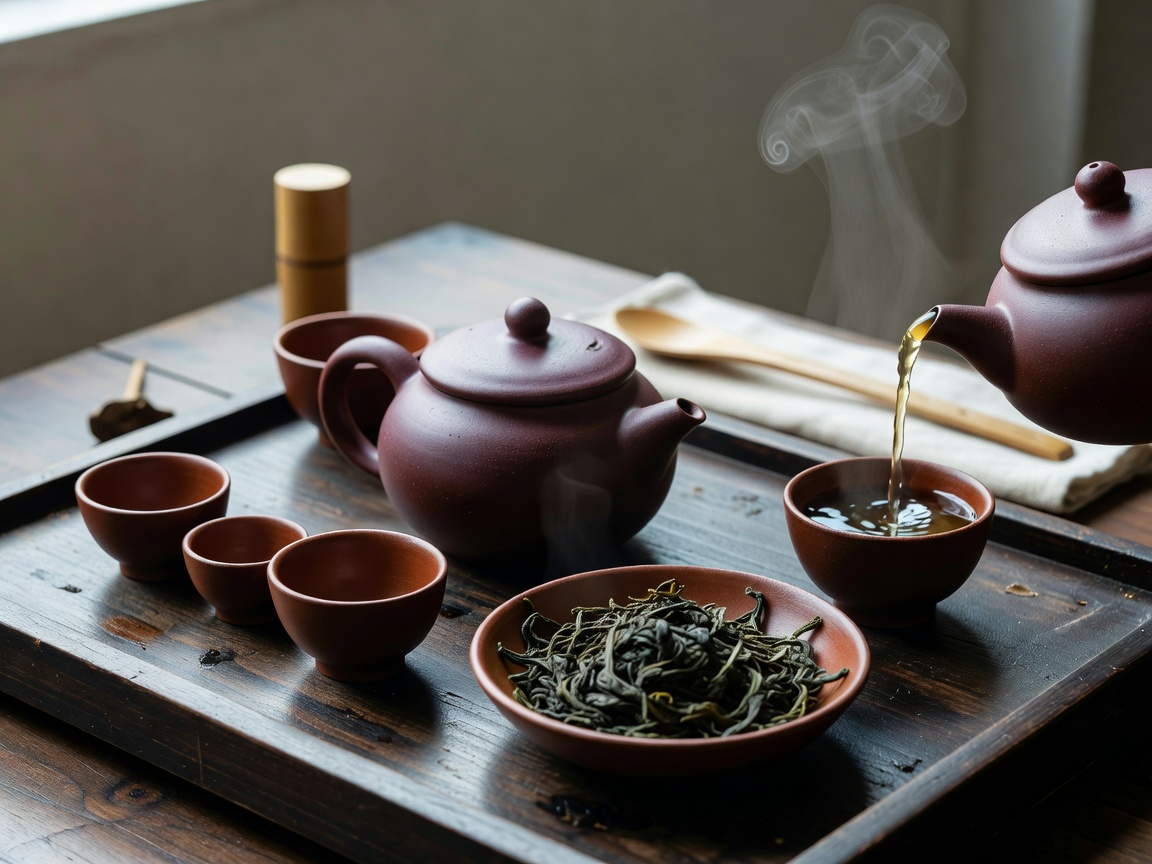
The Mastery of Partial Oxidation
Creating oolong is the most demanding of all tea manufacturing processes. The oxidation level can range anywhere from 10% to 85%, resulting in an incredible diversity of flavor profiles. Lightly oxidized oolongs, such as Tieguanyin (Iron Goddess of Mercy), lean toward floral, creamy, and herbaceous notes. Heavily oxidized and roasted oolongs, like Wuyi Rock Teas, present dark, mineral-rich, and toasted characteristics.
The Gongfu Cha Ritual
To truly appreciate the layered complexity of oolong tea, one must slow down and engage in Gongfu Cha—literally translated as 'making tea with skill.'
This practice involves using a high ratio of leaves to water in a small vessel, such as a Yixing clay teapot or a porcelain gaiwan. By performing multiple, short infusions (often 10 to 30 seconds), the tea drinker can experience the evolutionary journey of the leaf. The first steep may yield volatile floral aromas, while subsequent steeps extract deeper, sweeter, and more resonant body notes.